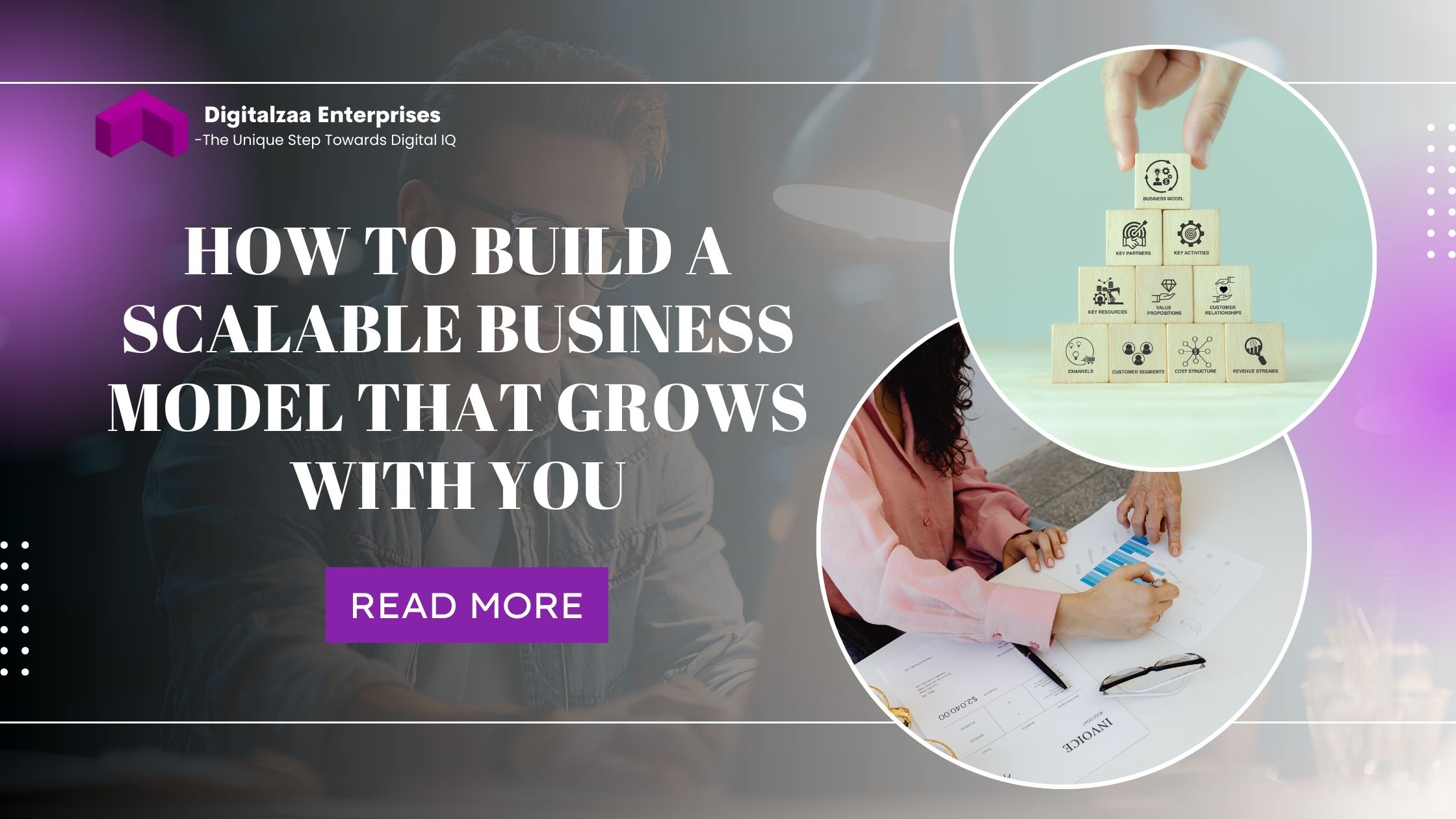
How to Build a Scalable Business Model That Grows With You
Building a business is exciting, but building one that continues to grow without burning you out is a different challenge altogether. Many entrepreneurs start strong, only to feel stuck when growth demands more time, energy, and resources than they can sustainably provide. This is where a scalable business model becomes essential.
A scalable business is not about working harder. It is about designing systems, strategies, and structures that allow your business to grow alongside you. In this guide, you will learn how to build a scalable business that supports growth, flexibility, and long-term success without sacrificing balance or vision.
What Does a Scalable Business Model Really Mean?
A scalable business model allows revenue to increase without a proportional increase in costs or workload.
Key characteristics include:
- Repeatable systems
- Efficient operations
- Clear processes
- Growth potential
True long-term business scalability ensures your business evolves without overwhelming its founder.
Why Scalability Matters for Modern Entrepreneurs
Without scalability, growth becomes exhausting.
A scalable model:
- Reduces burnout
- Improves profit margins
- Supports predictable expansion
Modern business growth strategies prioritize sustainability over constant hustle.
Start With a Clear and Profitable Core Offer
Every scalable business begins with a strong foundation.
Ask:
- What problem do I solve best?
- Which offer delivers consistent results?
- Where is demand strongest?
A focused offer simplifies how you build a scalable business and reduces complexity.
Standardize Your Processes Early
Processes create freedom.
Document:
- Sales workflows
- Client onboarding
- Customer support systems
Standardization is one of the most effective business growth strategies for reducing chaos and increasing efficiency.
Leverage Technology and Automation
Automation supports scalability.
Automate:
- Email marketing
- Appointment scheduling
- Payment processing
Technology enables long-term business scalability by removing manual bottlenecks.
Design Systems That Work Without You
A scalable business does not depend on constant founder involvement.
Build systems for:
- Content creation
- Customer communication
- Service delivery
Systems protect your time and help build a scalable business that runs smoothly.
Choose Revenue Models That Scale Easily
Not all revenue models scale equally.
Scalable options include:
- Subscriptions
- Digital products
- Licensing
- Group programs
Choosing the right model strengthens your scalable business model.
Focus on Customer Retention Over Acquisition
Retention fuels sustainable growth.
Improve retention by:
- Delivering consistent value
- Maintaining strong communication
- Improving user experience
Retention is a critical part of long-term business scalability.
Build a Flexible Team Structure
You do not need a large team to scale.
Consider:
- Freelancers
- Contractors
- Virtual assistants
Flexible teams support growth without excessive overhead, improving business growth strategies.
Use Data to Guide Expansion Decisions
Scalability thrives on clarity.
Track:
- Conversion rates
- Customer lifetime value
- Profit margins
Data-driven decisions reduce risk when you build a scalable business.
Create a Strong Brand That Scales With You

Brand trust accelerates growth.
A strong brand:
- Attracts loyal customers
- Builds credibility
- Reduces marketing friction
Brand consistency supports long-term business scalability.
Develop Repeatable Marketing Systems
Marketing should not rely on constant creativity.
Scalable marketing includes:
- SEO content
- Email funnels
- Evergreen offers
Repeatable marketing strengthens your scalable business model.
Balance Growth With Quality Control
Growth without quality erodes trust.
Maintain quality by:
- Reviewing systems regularly
- Training team members
- Listening to customer feedback
Quality ensures business growth strategies remain effective.
Plan for Growth Before You Need It
Proactive planning prevents overwhelm.
Prepare for growth by:
- Building systems early
- Creating SOPs
- Setting scalable goals
Planning supports long-term business scalability.
Avoid Common Scalability Mistakes
Common mistakes include:
- Scaling too fast
- Ignoring cash flow
- Overcomplicating systems
Avoiding these mistakes protects your ability to build a scalable business.
Mindset Shifts Required for Scalable Growth
Scalability requires thinking bigger.
Adopt:
- Systems thinking
- Delegation mindset
- Long-term vision
Mindset supports the success of your scalable business model.
Test, Measure, and Optimize Continuously
Scalable businesses evolve.
Regularly:
- Test new strategies
- Measure results
- Optimize systems
Continuous improvement strengthens business growth strategies.
Design a Business That Supports Your Lifestyle
Growth should align with your life.
Define:
- Ideal workload
- Income goals
- Time freedom
Lifestyle alignment is key to long-term business scalability.
Conclusion
Building a scalable business model is about creating a foundation that supports growth, freedom, and sustainability. When you intentionally build a scalable business, you design systems that allow revenue to grow without sacrificing your time, energy, or vision.
By applying smart business growth strategies and focusing on long-term business scalability, you create a business that evolves alongside you. Scalability is not about speed. It is about structure, clarity, and consistency. When your systems, offers, and mindset align, growth becomes manageable and rewarding.
The most successful businesses are not built on hustle alone. They are built on thoughtful design, strategic planning, and intentional execution. Start building for scalability today, and your future business will thank you. Click here to visit the shop and get tools to build a scalable business model.
Author

Disha Rathi
International Author & Founder
Disha Rathi, is the Founder of Digitalzaa Enterprises, Quest Internationals, Marketing Enigma Business Magazine, CEO at Reliserv Solution & International Author. Disha Got Awarded BEST EMERGING WOMAN ENTREPRENEUR of the Year 2022. Disha helps individuals & Businesses to scale their revenue using Online Marketing by adding professional Skills in their mindset to get more Clients/customers. She had mentored multiple Businesses to hit 6-7 figures in revenue using her Brilliant Techniques & her 10+ Years of experience in the Field of Marketing.

